Quantcast

Friday, 24 April 2009

Fergus Henderson's roast bone marrow and parsley salad

It's no surprise to my friends that Fergus Henderson is something of a hero of mine. I can always be counted on to order the weirdest, offaly-est option on the menu, so Henderson's restaurant St John, with its 'nose to tail' eating philosophy, is something of a mecca to me.

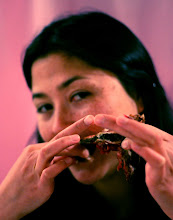
On any given visit you might find chitterlings, squirrel, pig's head or ox heart, showcased simply and without fuss. Everything I have ordered there has been delicious. One dish that never leaves the daily changing menu is roast bone marrow and parsley salad, which you can also order at the bar with a cheeky pint of Breton cider. I see it as almost criminal not to stop in and do just this whenever I am within a one mile radius of the place.

Alternatively, if you have a sympathetic butcher willing to give you calf's leg bones, you can make this at home.

Fergus' recipe serves four. You will need teaspoons or long thin implements like a lobster pick to scrape the marrow out of the bone.

12 x 7-8cm pieces of middle veal marrowbone
a healthy bunch of flat parsley, picked from its stems
2 shallots, peeled and very thinly sliced
1 modest handful of capers (extra fine if possible)

Dressing:
juice of one lemon
extra virgin olive oil
a pinch of sea salt and pepper

a good supply of toast
coarse sea salt

Put the bone marrow in an ovenproof frying pan and place in a hot oven. The roasting process should take about 20 minutes depending on the thickness of the bone. You are looking for the marrow to be loose and giving, but not melted away, which it will do if left too long (traditionally the ends would be covered to prevent any seepage, but I like the colouring and crispness at the end).

Meanwhile, lightly chop your parsley, just enough to discipline it, mix it with the shallots and capers, and at the last moment, dress.

Here is a dish that should not be completely seasoned before leaving the kitchen rendering a last minute seasoning unnecessary by the actual eater; this, especially in the case of coarse sea salt, gives texture and uplift at the moment of eating. My approach is to scrape the marrow from the bone onto the toast* and season with coarse sea salt. Then a pinch of parsley salad on top of this and eat. Of course once you have your pile of bones, salad, toast and salt it is 'liberty hall'.

Taken from Nose to Tail Eating, A Kind of British Cooking, by Fergus Henderson

*At St John they grill long slices of white sourdough so it is crisp, chewy and attractively seared with black charcoal lines.

St. John Bar & Restaurant
26 St John Street
London
EC1M 4AY

Tel: 020 7251 0848

Thursday, 23 April 2009

Launceston Place, April 23

Just got back from lunch with Sibilla. Mmmm two restaurants in two days, I'm feeling extremely lucky, and a little giddy from the over-indulgence!

Launceston Place is my idea of the perfect neighbourhood restaurant, as well as being a culinary destination worth travelling for. If you live in London then I would urge you to go. Headchef Tristan, formerly of Petrus under Marcus Wareing, is incredibly talented and never ceases to surprise and delight with his own take on Modern British cuisine. Paired with friendly, relaxed service under Hadi Aknin's watchful eye the result is a leisurely dining experience that leaves one sated and soothed.

We took advantage of the very reasonable set lunch offer, £18 for three courses, I had duck salad with rillettes, pickled vegetables and wild herbs, braised beef chop with confit tomatoes and basil and a sticky, caramelised apple tarte Tatin that I could develop a very serious addiction for.

Launceston Place
1a Launceston Place
London W8 5RL

Tel: 020 7937 6912

Wednesday, 22 April 2009

Kiku, April 23

Ronan is going to New York tomorrow for a long weekend. So as a pre-weekend treat we went to Kiku. Kiku is my longstanding favourite Japanese restaurant. No fuss, no frills, squeaky fresh sashimi and sushi.

Our favourite sushi has no name I know of. Its a gunkan, topped with sweet ikura (salmon roe) and a quail egg yolk. Ro doesn't even like eggs much. Its gooey, yolky, seaweedy squidge heaven. Brilliant.

There is a gunkan with tobiko (flying fish roe) and quail egg yolk that is called uzura no tamago. If anyone knows the name of the ikura version I'd love to know!

Friday, 17 April 2009

The best chocolate chip cookies

This recipe is definitely the best I've come across so far. Any challengers to this for this title however are very welcome! I can't think of anything less arduous then testing chocoloate chip cookie recipes...

A few things I noticed:
  • The 36 hour resting period is apparantly crucial for obtaining the right balance of crispy-chewy texture. This is kind of wierd, as you either have to wake up really early one day to make the dough so you can bake in time for dinner after a day, or prepare the dough late in the evening and bake them for breakfast?! So my dough ended up 'maturing' for more like 44 and a half hours. The cookies were still crispy on the outside and chewy on the inside so I figure they were a success.
  • I also made mine much smaller - normal cookie size rather than the 6 inch behemoth, simply because I would eat the whole thing and feel ill...
  • The sea salt just before baking seems to be pretty important. My cookies were too sweet without, and extremely moreish with the extra sprinkling.
  • I had no vanilla extract and substituted half a teaspoon of vanilla seeds scraped from a pod.
  • I also tried this with half muscavado, half white sugar instead of the soft brown, which made my cookies even more toffee-ish.
  • I used normal plain flour, rather than half normal and half cake flour, and still got great results (apparently cake flour has a higher protein content and its starch content makes it more absorbent so the dough dosen't spread to the far corners of the tray during baking.)
David Leite's Recipe: Chocolate Chip Cookies, Adapted from Jacques Torres
Published in the NY Times in July 2008 - click here for the original article

Time: 45 minutes (for 1 6-cookie batch), plus at least 24 hours' chilling

2 cups minus 2 tablespoons
(8 1/2 ounces) cake flour
1 2/3 cups (8 1/2 ounces) bread flour
1 1/4 teaspoons baking soda
1 1/2 teaspoons baking powder
1 1/2 teaspoons coarse salt
2 1/2 sticks (1 1/4 cups) unsalted butter
1 1/4 cups (10 ounces) light brown sugar
1 cup plus 2 tablespoons (8 ounces) granulated sugar
2 large eggs
2 teaspoons natural vanilla extract
1 1/4 pounds bittersweet chocolate disks or fèves, at least 60 percent cacao content
Sea salt

1. Sift flours, baking soda, baking powder and salt into a bowl. Set aside.

2. Using a mixer fitted with paddle attachment, cream butter and sugars together until very light, about 5 minutes. Add eggs, one at a time, mixing well after each addition. Stir in the vanilla. Reduce speed to low, add dry ingredients and mix until just combined, 5 to 10 seconds. Drop chocolate pieces in and incorporate them without breaking them. Press plastic wrap against dough and refrigerate for 24 to 36 hours. Dough may be used in batches, and can be refrigerated for up to 72 hours.

3. When ready to bake, preheat oven to 350 degrees. Line a baking sheet with parchment paper or a nonstick baking mat. Set aside.

4. Scoop 6 3 1/2-ounce mounds of dough (the size of generous golf balls) onto baking sheet, making sure to turn horizontally any chocolate pieces that are poking up; it will make for a more attractive cookie. Sprinkle lightly with sea salt and bake until golden brown but still soft, 18 to 20 minutes. Transfer sheet to a wire rack for 10 minutes, then slip cookies onto another rack to cool a bit more. Repeat with remaining dough, or reserve dough, refrigerated, for baking remaining batches the next day. Eat warm, with a big napkin.

Yield: 1 1/2 dozen 5-inch cookies.

Tuesday, 7 April 2009

Hearty cabbage and bacon soup

A head of Savoy cabbage, or a any combination of cabbage leaves e.g. white, pointed, cavalo nero, January King
300g pancetta or unsmoked bacon, in rough chunks
Half an onion, sliced
A few sprigs of thyme
A good pinch of dried chilli flakes
Plenty of cold chicken or vegetable stock
A melting cheese you like to eat, so far gruyere and parmesan, taleggio, cheddar and emmenthal have all been successful additions
Half a loaf of white bread, ideally with a good crust and chewy grain, sourdough is great
A few fat garlic cloves
Salt and pepper

A large deep ovenproof pot is perfect for this. Render the bacon over a low heat until the fat runs out and the meat begins to brown and crisp. Add the onions with a pinch of salt and sweat until soft, golden and beginning to caramalise.

Add the thyme and chilli and season well. Go easy on the salt, especially if your bacon is smoked.

Chop the cabbage leaves roughly into large chunks and shreds, discarding any tough cores. Rinse the leaves in a strainer under running water, add them to the onions and bacon and turn the heat up to high. Cook, stirring constantly, until the cabbage wilts and starts browning around the edges, about 10 minutes.

Add the stock, cover, bring to the boil then simmer gently for half an hour.

While the cabbage is cooking, preheat the oven to 180 degrees Celsius. Toast thick slices of bread and while they are hot rub both sides with the cut surface of a clove of garlic. Salt and pepper the toast too. Grate the cheese coarsely, or otherwise slice or break it up as best you can.

When the oven is hot and the cabbage is soft taste the soup, adjust the chilli to as hot as you'd like and season and/or reduce the broth if it tastes bland or weak. Once it's to your liking, top the soup with overlapping layers of toast, and then cover the toast completely with cheese. Season again and bake uncovered until the cheese is bubbling and brown and the kitchen smells wonderful.

Serve the whole pot at the table with a big ladle and shallow soup bowls, so everyone gets a good mound of cabbage and bacon, lots of spicy broth and a cheesy, garlic bready topping.

Tuesday, 31 March 2009

Oval chicken

This is Ronan's recipe, created from his time living in Oval, where friends were always welcome and you never quite knew how many people might or might not drop in for dinner.

The beauty of Oval chicken is you can increase the number of joints and always have perfect, lemony, juicy meat with crisp skin. Its important to have a pan (or more) that will fit all of your joints as snugly together as possible.

Its so easy to do and univerally loved that we make Oval chicken all the time - for lazy evenings in, dinners with friends, relatives or picky eaters.

The quantities of seasonings are given as general guidelines only, go with what you think looks good to eat.

For two:
4 thighs, or 2 whole legs jointed into 4 pieces
6 fat cloves of garlic
6 sprigs of thyme (or lemon thyme or rosemary)
a pinch of chilli flakes
half a lemon
olive oil
salt and pepper
a glass of white wine

Preheat a fan assisted oven to 200 degrees Celsius.

Find an ovenproof dish that will fit all the joints snugly with skin exposed and flesh hidden. Oil the dish, season the joints with salt and pepper and add, turning to cover in oil. Slice the lemon into quarters and place a segment underneath each joint along with a sprig of thyme. Tuck the rest of the thyme and the garlic cloves (unpeeled) into any remaining gaps between the chicken. Scatter over the chilli flakes and season again lightly.

Place in the hot oven for 20 minutes, it should come out sizzling lightly in the fat, with the skin just beginning to brown. Add enough white wine to come about halfway up the dish, being careful not to splash the skin. This will keep the meat moist while the skin crisps.

Return to the oven and lower the temperature to 180 degrees. Cook for a further 20 - 25 minutes until the skin looks crisp and brown.

Remove, serve and pour over the delicious juices. Salad is a great accompaniment, or little potatoes roasted on a rack under the chicken for the same time. We had purple sprouting broccoli, steamed for three minutes then tossed with butter and salted.


Tuesday, 24 March 2009

The best Kim Chi, at last

After months of experimentation and kilos of cabbage eating, I finally have a kim chi recipe I am happy with. This probably sounds ridiculous, I mean, its kim chi, how hard can it be? Cabbage, chilli, garlic, ginger - mix it up and Bob's your uncle, right? Apparently with me, wrong.

With a vegetable as watery and bland as Chinese cabbage (really, its only redeeming quality is its crunch), a few flavourings go a long way, and for weeks I ended up with batches of Korean pickle that veered between having waaaay too much salt, sugar, chilli (creating 'Atomic Kim Chi'), ginger, garlic or any combination of these. You name it, I overdid it.

I have finally learned my lesson and realised that less is more, but the rate at which I am churning and fermenting kim chi at a rate is still being overstripped by how quickly I eat it. Want some crisps? Kim chi! Feeling peckish? Kim chi! Feel like breakfast? Kim chi! Hell, any time you feel like munching? Kim chi!!

My method is not the traditional way of preparing classic kim chi, but I think it suits modern kitchens as it is significantly less stinky than fermenting the cabbage whole in a cool dark place, with seasonings layered between each leaf. I'm no expert but I thought this was a pretty interesting round up of general kim chi related info.

Try to find Korean chilli flakes and fish sauce. You could substitue fresh or crushed dried chillies with no seeds, and Thai or Vietnamese fish sauce, but the results won't be quite the same. I'm afraid I have no idea how to pronounce the names for the ingredients you need in Korean, but here's a picture - I showed a similar one to a nice lady in Korean supermarket and she was able to help.

You can leave out the daikon and/or the spring onions, but I like the flavour they add to the mix.

Ingredients:
1 large Chinese cabbage, approx. 1.25kg, cut into thick 5cm rounds, then quartered into squares
10% of the cabbage weight in sea salt, so 125g in this case
1 fat clove of garlic, crushed or finely grated
A small chunk of ginger (equivalent to half of the garlic), finely grated
3 spring onions, finely sliced
an equivalent amount of daikon, peeled and cut into 1cm wide batons
2 tsp Korean fish sauce
2 tbsp Korean dried chilli powder
1 tbsp sugar

Combine the cabbage and salt together in a large bowl, or two, and toss together until all the leaves are well salted. Leave the bowl(s), uncovered, for four hours. If you happen to be passing by give them a quick stir. Fill the bowl(s) with cold water and let the cabbage soak in the brine for one more hour. Try a leaf - it should be very salty, but not so salty it is unpleasant to eat. If you find the latter, drain the cabbage, rinse and soak in cold water again for half an hour or so before trying again.

Drain the cabbage and while it is in the colander push down on the leaves with your hands. You want to squeeze out some of the moisture. You will see the cabbage turns from opaque white to a more translucent clear colour as you squeeze. The cabbage should now be about half its original size, having lost about a third of its weight in salt water.


Put the cabbage into a bowl and add the rest of the ingredients.

Now, using your hands, get right into the cabbage and squish, squelch and squeeze away so the dried chilli powder bleeds red into everything and the garlic, ginger and oniony flavours are mashed into the cabbage and daikon. Take the time to do this thoroughly so that you really work the seasonings into each piece of cabbage. Wear plastic gloves if you don't like the garlicky, onion-y smell on your hands as it can linger a bit (I love it). Definitely wear gloves if you have any kind of cut, even a paper cut!

When it looks and smells delicious, taste a piece and then put the whole lot into an airtight container, seal and leave for up to a week or so, depending on the ambient temperature. Right now in my relatively warm London kitchen, three days is enough.

You'll know its ready when your cabbage changes in taste and takes on a lovely sourness. The chilli might taste a little hotter, and all the flavours will have melded into one - kim chi!