Quantcast

Friday, 31 July 2009

Melted marrow


You may have seen enormous marrows at a market recently. Or perhaps like Sibilla you have been growing courgettes this summer and left the patch untended for a few days, returning to discover that your sweet little courgettes, left unpicked, have swollen into humongous Mr. Hyde versions of themselves.

"We'll feed them to the pigs." was our first reaction, but wait! These are summer squash, related to their winter cousins pumpkin and butternut, which are also capable of reaching gargantuan sizes. Surely there must be something we can do?

I am very fond of marrows now.

They do need some gentle love and attention, but you'll end up with the perfect comfort food. We ate this with roast chicken, braised rabbit and on its own in big steaming bowlfuls.

The trick is to separate the pale, creamy yellow flesh inside from the rest of the monster. Once cooked, marrow has a delicate, clear flavour than reminds me of Chinese winter melon and the consistency of softened butter.

First cut the marrow down into manageable sections and remove the dark geen skin with a sharp knife. These blocks can then be sliced into rounds and chopped into cubes. I throw away the spongey, seedy parts as I find them stringy and chewy.

Serves 6-8 as a side dish

Ingredients:
One or more marrows cut into cubes roughly 5cm wide and 3cm high, 2-2.5kg
5 large cloves of garlic, peeled and crushed with some salt
Olive oil
Salt and pepper
A cup of water

You'll need a big pot that can hold all the marrow, preferably heavy based. Generously cover the base with about 1cm of olive oil, add the garlic and sprinkle liberally with salt and ground pepper.

Add a third of the marrow cubes and then stir well until every cube is coated with oil and seasoning. Repeat with the remaining two thirds of marrow and finish with a final glug of oil and a scattering of salt and pepper. Pour over the water and cover with a tight fitting lid.

Place the pot over a low flame and forget about it for 45 minutes. When you lift the lid the cubes should be almost submerged in bubbling golden liquid. Give it another 15 minutes if not. Then remove the lid and leave the marrow to simmer for another 20-30 minutes, or until you can only see a little liquid left.

Coax the marrow into a large serving dish, or ladle into deep bowls straight from the pot. Eat with a spoon.

Wednesday, 8 July 2009

48 hours in Vancouver

Sitting in the peaceful quiet of Pearson Island, breathing in pine scented air, it's remarkably hard to remember the sights, sounds and tastes of Vancouver city, where I was just a few days ago. So before the memory fades forever from my hole-riddled mind, here's a few notes from a city that certainly deserves several more gastronomic trips.

Given the brevity of my visit we set ourselves a tight schedule - first on the list, lots of local seafood, both raw as sashimi, and cooked, a little bit. Next? Well, it has to be Chinese, Cantonese style and finally, Jason's favourite spot in town.

First stop was Miko Sushi, recommended by Earnest for good quality, traditional sashimi without emptying your wallet in the process. Miko also offers a large selection of appetizers, many from the robata grill. Jason pronounced their grilled ox tongue to be the best he has ever tasted, for successfully delivering skewers of juicy, springy textured meat, lacquered with sweet-salty sauce and charred around the edges. Robata grilled chicken gizzards were almost as good, but definitely came second place.

We asked for locally sourced fish sashimi. Highlights included frilly fronds of mirugai (giant geoduck clam) that tasted sweet and buttery, generous slices of pale albacore tuna with a rosy blush and fat ivory slabs of toro, ready to melt on the tongue. Sockeye salmon was an almost violent orange-red colour compared to the ghostly tuna, and displayed none of the white fat seams characteristic of most salmon. It made sense that the taste was less rich, more delicate and quite gamey.

The next morning began with a late breakfast of Japanese hot dogs...yes really. The Japadog street cart is reputedly the closest thing to the real deal, outside of Japan. We shared a Terimayo, which is smothered with teriyaki sauce, Japanese mayonnaise, seaweed shreds and fried onions. Instead of the familiar sweet-hot taste found in the US original, this was more porky juices, mild mayo-savoury tang and briny finish, altogether pretty good. Add some tamago egg and you have the Japanese version of an English breakfast bap!


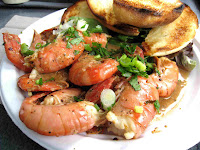
Go fish is little more than a shack, perched on False Creek fisherman's wharf, so near to the sea you could throw your chips in. A collaboration between Fisherman's Wharf and chef Gord Martin, the aim is to raise delicious awareness of local fish.

Wild with excitement, we ordered battered halibut and chips, white spot prawns in sweet and sour coconut sauce and tacones, soft tortilla cones stuffed with coriander, salsa, chipolte cream, 'Pacific Rim' coleslaw (white and red cabbage, sesame and pumpkin seeds, lightly dressed with sesame mayo) and tender albacore or just cooked oysters.

As our order arrived, so did the rain. Fleeing from the unsheltered plastic tables and chairs we took cover under Jason's car boot door. My favourite memory of the whole trip is sitting in the back of the car with my legs dangling over the edge, biting into chips so hot they burnt my fingers, peeling fat rosy prawns and munching tacones dripping with fruity Valentina hot sauce.

There was time before dinner for a quick aperitivo at Rodney's Oyster House, where I savoured a long awaited reunion with my beloved Kumamoto oysters and met some new bivalve buddies - plump, sweet Summer Breeze, the darlings of Vancouver Island, and crisp, briny Village Bays from East Toronto. These were washed down with a lemony 'Zydeco Stew Caesar', apparently Canadian for a Bloody Mary, made with clamato juice and garnished with a prawn.

If this is as appetitively exhausting to read as it is to write then I apologise!

Entering the Golden Ocean Seafood Restaurant was like walking into any decent family restaurant in Hong Kong, all chintzy decor, large round tables and Cantonese cacophony. The food was also just as good. Some say that San Francisco may have lost its edge, leaving Vancouver to be crowned the new capital of Chinese cuisine outside of Hong Kong. We ate roasted duck with glazed skin the colour of mahogany, delicate double boiled tilapia (zi4 yu3) soup, juicy pork and water chestnut patties and a quivering dish of steamed tofu, prawns and oyster mushrooms.

With one lunch left, it was Jason's noodle mecca or a plane straight back to London. On first glance, Sha Lin Noodle House looks like any other shabby cheap Chinese, except all the tables are full and frequently there is a queue. Separated from diners by glass panels, Beijing chefs twirl and pull fresh noodles, plopping them into boiling water and tossing others into bowls to be dressed with soup and sauce.

To make Jason's favourite noodle dish (zha1 jiang4 shou3 la1 mein4), freshly made noodles are essential for their chewy bite. These are topped with little nuggets of chopped pork shoulder in a musky yellow bean sauce and a pile of raw cucumber shreds. You can toss the whole lot together and eat it as it is, or add lashings of black vinegar, chilli oil and/or minced garlic (if you're feeling really strong).

We could have just ordered noodles and been satisfied, but as there was a large menu and a girl with a mission, we also ate translucent hot and sour potato slivers, Chinese cabbage shreds dressed in white vinegar, cool sweet potato starch noodles with sesame paste and black vinegar and fried spring onion pancakes.


Then we left for Langdale ferry.

This is by no means a list of the best places to eat, but on a budget it was pretty good. Vancouver magazine's Restaurants section was a useful resource. It seems to offer a fairly comprehensive list of restaurants, and also gives out annual awards - take a look at the 2009 winners.

Miko Sushi
1335 Robson
Vancouver, BC V6E 1C5, Canada
(604) 681-0339

Miko Sushi on Urbanspoon

Japadog
899 Burrard St
(604) 642-0712

Go Fish Ocean Emporium
1505 West 1st Avenue (at False Creek Fisherman's Wharf)
(604)730-5040


Go Fish Ocean Emporium on Urbanspoon

Rodney's Oyster House
Suite 405 1228 Hamilton St
(604) 609-0080

Golden Ocean Seafood Restaurant
2046 41st Ave W
(604) 263-8606

Golden Ocean Seafood on Urbanspoon

Sha-lin Restaurant
548 W Broadway
(604) 873-1816

Sha Lin Noodle House on Urbanspoon

Wednesday, 24 June 2009

Courgette parmigiana


Served warm for lunch or bubbling hot for dinner, this dish is a great way to use up larger courgettes or marrows that appear at the end of the season, or if you find them lurking in your vegetable garden after going away for a week or so. You could use young skinny courgettes instead, but I find their flavour is so sweet I would rather shave them into long thin slices and dress them simply with barely a half clove of crushed garlic, some lemon juice, mint and olive oil.

The important thing to remember is to make sure, whatever the size, the slices are cooked until they are floppy and nicely charred. A cast iron grill pan is great, or a less heavy non-stick grill pan will work just as well. You just want the raised ridges to create those lovely charcoal lines that give the courgettes an added smokey flavour.

The consistency of the tomato sauce is quite key as it will affect how dry or watery the finished parmigiana will be. You can tell the sauce is ready when individual rising bubbles settle into one place and make a pleasant 'blip blip' sound. It should be thick enough to coat pasta, but still pourable.You could use only tinned tomatoes instead of the passata, but the sauce will need more reducing. In Tuscany there's a brand called Mutti who make an excellent tomato polpa (crushed finely).

I like to use a clear pyrex oven dish as it shows off the lovely red, green and pale yellow layers, but really any ovenproof dish will do, even a tall round one. The oval dish I used in the photo was 33.5cm by 22.5cm at its widest, and 6cm high.

Serves six as a main course, or many more as an accompaniment.

About 1.5kg of courgettes or marrows
425ml tinned tomatoes, crushed
750ml tomato passata
A small onion
Two level teaspoons of sugar
250g Parmesan
250g aged pecorino, or Corzano e Paterno's pasta cotta
A lemon, sliced in half
Salt and pepper
Olive oil

Preheat the oven to 180 degrees Celsius.

Heat a grill pan over a medium to low flame. Slice the courgettes into rounds roughly half a centimetre thick. Sprinkle with salt to draw out some of the moisture. The pan is ready when it starts to smoke, brush some oil lightly over the pan and quickly add a batch of courgettes, enough to cover the base with a layer. Char the slices for 3-4 minutes on each side and brush a little oil on any that start to look dry. Try not to overdo the oil as the courgettes should steam quite happily and excess oil will make the final dish greasy. Allow the courgettes to cool enough to handle.

While you wait, chop the onion into fine dice and sweat with salt and olive oil in a saucepan over a low heat. Try not to let them brown. When the onion is translucent and soft, add the tinned tomatoes and passata. Add the sugar but do not season until the sauce is ready to avoid overdoing it. Give everything a good stir, bring it to the boil then simmer gently until the sauce has reduced to a thickish, but still sloppy, consistency. Season with salt and pepper to your taste and allow to cool a little.

While the sauce reduces, coursely grate the parmesan and pecorino and mix together. There's no need to bother with super fine cheese.

Brush your dish with oil and start with a thin layer of tomato sauce. Cover with a layer of overlapping courgette slices until no sauce is visible, then squeeze over some lemon juice and season lightly. Next sprinkle over a thin layer of cheese; you will still see bits of green underneath. Repeat with a layer of tomato sauce first and continue layering courgettes, sauce and cheese until everything is used up. The last layer should be a thick topping of cheese to blanket everything else.

The parmigiana can be prepared in advance up to this point. If you freeze it do allow it to defrost thoroughly first.

Season the dish one last time, drizzle over with olive oil and pop it into the oven. It should take roughly an hour, check after 45 minutes. The cheese topping should be melted, golden brown and bubbling. The dish will be very hot, and can sit in the warmer or a turned off oven without coming to any harm.

Serve as a side dish, or with a lemony green salad and crusty bread as a main.

Porcine perfection


From Sausage Fest in Basel to a pork feast in Tuscany, Sibilla's birthday at Villa Paterno was a true celebration of all things pig.  The spit roasted Cinta Senese adolescent in the photos was a gift from her half brother Tillo and the offspring of two Cinta Senese pigs serendipitously found wandering around his garden a few years ago. 

This ancient breed of Sienese pig, native only to the Chianti region since at least the 14th century, is identifiable in life by white forelegs and shoulders (cinta is Italian for 'belt' in reference to this distinct stripe of white skin) and in death by an extremely high proportion of fat to meat.

Reared semi-wild on a diet consisting mainly of grass, chestnuts and acorns, both flesh and fat are highly prized, being rich, fragrant and highly flavourful.  The Cinta Senese almost became extinct when farmers shunned the high production costs involved and opted to raise modern breeds of white pigs, seen as more economical and suited to today's market demand. Thankfully a few dedicated breeders in the Sienese Mountains refused to give up, and a recent revival of interest in Cinta pork has helped to prevent this unique breed from disappearing altogether. 

Today there are roughly eighty Cinta breeders in Tuscany. With creatures this special it feels all the more important to ensure that not a single part of the animal is wasted.

Our little pig was spit roasted on Saturday night by Marinella's husband. Great chunks of fatty, tender meat and crisp blackened skin were piled onto wide shallow dishes and served with raw marinated courgettes, melted courgettes and courgette parmigiana, thanks to a garden glut of guess what? 

Being me, I noticed that the head, split in two, was left untouched in favour of less intimidating cuts and pounced, like a cat. First the brains were scooped out and eaten with a sprinkle of salt.  They tasted like an unctuous, creamy, mild pâté. Two halves of a tongue swiftly followed suit. Finally a pair of cheeks, soft and porky, smeared with a whisper of sweet and sour chutney. It was a heaven-sent dinner.

The nest day leftovers were boiled into a meaty broth, rendered for lard, crisped back to the last slivers of crackling and shredded for a cold lunchtime salad with sliced red onion, fennel, tomatoes and lettuce, combined with a lemony mustard vinaigrette to help cut through the fat embalmed meat. Any further remainders were given to Clare and Matilda, white, fluffy Maremmano dogs who's ancestry dates back to the same period as the Cintas. 

In my mind it doesn't take much to recall the the musky sweet scent of Cinta fat. We cooled it to a creamy white consistency and used it for days later, in wild boar cacciatora, to baste a roasting chicken, and for spreading over toasted Tuscan bread, rubbed with garlic and sprinkled with salt.


Monday, 15 June 2009

Thrifty chicken liver pâté


I have to be honest, the only reason I decided to make this is because I caught sight of tubs of frozen chicken livers being sold at Sainsbury's for a mere 44p.

44p! That's less than a bag of crisps! Add butter and a few other bits and you have a smooth, creamy, savoury pâté that could be elegant enough to be a dinner party starter, or a cosy supper with plenty of toast, maybe some cornichons, and a lemony, mustardy dressed green salad.

I like the taste of chicken livers, so I prefer to use less butter and more seasonings to create a balance of sweet, salty, herby and bitter flavours. Alternatively you could increase the butter by up to double for a milder, richer version. If you do this you may need a touch more salt. The trick is to keep tasting while you blend and season, until it is as you would like it.

250g chicken livers
whole milk
125g salted butter (or up to 250g if you prefer)
half an onion
a clove of garlic
2 tablespoons of port, or brandy
2 teaspoons fresh thyme leaves
cayenne pepper
nutmeg
salt and pepper

Rinse the livers, pull off any white membranes and cut off any green looking bits. Put them in a small, heavy based saucepan with knob of butter. Pour over enough milk to just barely cover the livers, then heat very gently over a low flame, stirring every now and then and breaking up the livers as they cook until there are no traces of pink left. This should take 10 minutes or so, be careful not to let them form a crust or the finished pâté will be grainy.

While the livers cook, finely chop the onion and soften gently with butter and a pinch of salt in another pan. Finely chop the garlic (or grate it with a microplane - these are amazing for garlic, ginger, zest, to name a few things) and add to the pan. The onion should become translucent, stop before it browns. When the onion is soft, add the port or brandy and half of the thyme leaves. Strain the milky liquid from the livers with a fine metal sieve and add the to onions. Turn up the heat to medium and reduce the milk and onion mixture until it has the consistency of a thick sauce. Season with black pepper, a light sprinkling of cayenne pepper and the same again of grated nutmeg.

Combine the cooked liver and the seasonings in a food processor and whizz until smooth. Or you could push the whole lot through a fine metal sieve. Allow the mixture to cool abit so the butter won't melt when you add it.

When the mixture is cool, blend in the remaining thyme leaves and the butter in cubes and taste after you have mixed in about 100g. Now is the time to taste and add more salt, pepper, cayenne or nutmeg. The nutmeg should lend sweetness to the pâté, while the cayenne gives an undertone of warmth - don't overdo the cayenne as the pâté should not be spicy hot. If the pâté tastes too strong, add more butter.

Pour the pâté into a dish to set. This pâté will keep for a few days if covered and in a fridge. If you plan to keep it for longer, cover the top with clarified butter.

Sunday, 14 June 2009

The best asparagus

Hello hello!

I've been rather quiet on the writing front recently, partly due to distractions like job interviews, Mum coming to visit, and a trip to Switzerland to check out Giacometti, contemporary art and 'Sausage fest 2009'. The latter is an annual celebration of all things wurst that began with my delicate, elegant Chinese mother declaring her secret love of sausages when the Meijers were debating what to serve forty odd artists, collectors and exhibitors after a long day at Art Basel.

Every other moment in London has been occupied by eating asparagus.

Here's a few favourite ways for doing the same thing. The recipes are so simple it might seem silly to write them down, but as I could eat them every day for the whole short season without getting bored, I think they are worth mentioning.

Serves two as a starter, or one...

Asparagus with lemon and butter

My first asparagus of the season is always dressed with lemon and butter. Somehow, olive oil won't do, it almost tastes too floral. To me, butter smells of earth, grassy fields, dairy cows and rich indulgence. The lemon juice provides a lift, highlighting the sweetness of the spears. Finally the salt should have enough texture to give you that satisfyingly salty crunch when you bite down on the soft stems.

A bundle of asparagus, around 250g
A few thin slices of the best salted butter you can find, ideally English or Irish
Half a lemon
Sea salt flakes

Snap off the woody parts of the asparagus by bending each spear near the base. If the stalks are really fat and meaty, I like to shave some of the green skin off with a vegetable peeler, otherwise I don't bother.

Bring a large saucepan of water to the boil, salt liberally and add the asparagus, stems first. Its fine if some of the tips stick out of the water as they will steam nicely. If you have a steamer you could steam the whole lot instead, it only take about a minute longer, if that.

While you wait, smear a slice of butter over the centre of your plate(s) and sprinkle with salt and pepper. The asparagus takes 4-5 minutes, depending on the size of the stems. If you fish one out and cut off a piece it should have lost its raw crunch but not be mushy soft.

Drain the asparagus well to get rid of excess water. Before serving, rub with the rest of the butter, squeeze lemon juice all over, season again and eat immediately with your fingers.


Asparagus with balsamic vinegar

I was reading 'Comfort me with apples' by Ruth Reichl on the way back to London. Her description of eating asparagus, dipped in her first taste of 'aceto balsamico', stirred up such a craving I was fidgeting on the the plane, fantasising on the tube and rolling my luggage around Waitrose hunting for asparagus shortly after.

Use the best balsamic vinegar you can find or afford - it should be, in Ruth's words, 'thick enough to cling' and taste raisiny sweet, balanced with sour vinegar. Definitely avoid the mass produced versions that contain water, sugar, E numbers and colourings, choose one made in Modena and aged for at least twelve years. Riserva di Famiglia, made by Acetaia Dodi is a great option and available in small measures, perfect since a little goes a long way. Right now at home we have a matured balsamic vinegar from The gift of oil, which is delicious.

A bundle of asparagus, around 250g
Sea salt flakes
Aged balsamic vinegar, ideally Tradizionale or of a similar quality

Prepare and cook the asparagus as above. Pour the vinegar into something small and shallow like a soy sauce dish. Plate the asapargus, sprinkle with salt and eat straight away, dipping each stalk as you go.


Charred asparagus and prosciutto

A bundle of asparagus, around 250g
8 or so slices of prosciutto crudo, I like San Daniele most
Sea salt and black pepper

Parboil the asparagus for two minutes and drain them well. Brush the stalks with olive oil and finish them on a barbeque or a cast iron grill pan over a high heat. You could skip the parboiling, but it will take longer and you need to keep the heat medium to low to stop the spears burning before the centres are cooked. I like the contrast of soft stalk and smoky charcoal, which seems easiest to acheive if you boil them first.

Season the asparagus and eat while hot, winding half a slice of prosciutto around each stalk so the fat melts and the ham warms.

Saturday, 23 May 2009

Honeycomb tripe salad

I know that for most people, tripe is one of their least favourite foods, to put it mildly. It's associated with memories of gigantic pots of boiling stinkiness, force feeding in childhood, and acts of human unkindness. But I love it.

Maybe it's due to my Chinese upbringing and the constant encouragement to try suspicious looking foods, or just that the Cantonese cook tripe with such savoury, piquant sauces you'd be a lunatic not to like it. Nevertheless despite my fondness, until now I had only encoutered tripe hot, either 'a la fiorentina' (submerged in a sweet, smooth tomato sauce) or in dim sum. Cold tripe was a revelation.

We bought our tripe from an incredible stall in Florence's Mercato Centrale, called Nuova Tripperia Fiorentina. It specialises in all things cooked cow offal. It may not be everyone's cup of tea, but Sibilla and I thought we had found a small stall from heaven. Along with several different types of tripe, you can buy cooked trotters, snout, udder and uterus to name a few.

Feeling brave we bought a slice of udder (called poppa in Italian), procrastinated over cooking it, and finally seared it on a high heat with a dusting of seasoned flour. Sprinkled with lemon juice it was delicious, almost cheesy tasting. I know that sounds deeply wierd, but really it was delicious!

Serves two for lunch or four as part of lunch

300g cooked tripe, the one with a honeycomb texture works best, but any will do
Three large tomatoes, coursely chopped
Two sticks of celery, thinly sliced
Half a red onion, finely chopped
Juice and zest of a lemon
Half a tablespoon of red wine vinegar
Olive oil
Salt and pepper
A good handful of parsley, mint, or both

Slice the tripe into thin, bite sized strips. Add the tomatoes, celery and onion, then season well and toss together with the lemon, vinegar and olive oil. This salad is best eaten cold so leave it to marinate in the fridge for a few hours.

Just before you serve, roughly chop the parsley and mint, scatter over and toss again. The tripe should have a cool, crunchy texture, which is lovely soaked in its earthy, lemony sauce and given sparkle by brightly flavoured herbs.

Here's a picture of some tripe from Nuova Tripperia. As soon as I can persuade Sibilla to translate the Italian, or sit down with my Italian-English dictionary, I'm going to try the recipes on the website.